

Practising difficult conversations with an AI patient
Back to Menu ↩ Good doctors do not simply tell patients what to do. They explain the options, listen to the patient’s values and concerns,
Every day, healthcare workers meet patients who do not share their language or their cultural background. Language is only part of the challenge. Patients may have different ideas about illness, about the role of the doctor, or about what good care looks like. A new study from Italy looks at one way hospitals try to close this gap: the intercultural mediator.
The study, published in the journal Healthcare, interviewed 13 healthcare professionals (9 nurses and 4 doctors) working with migrant patients in two public hospitals in Italy. The interviews took place in June and July 2024. It is a qualitative study, which means it is based on people’s own descriptions of their experience rather than on numbers.
An intercultural mediator does more than interpret words. Mediators also explain cultural norms and expectations, help prevent and resolve conflicts, and support patients as they find their way through the healthcare system.
The researchers found three main themes. First, staff described real difficulties in understanding migrant patients because of language and cultural barriers. Second, they saw the mediator as a bridge between different cultural worlds. Mediators helped to build trust, improve therapeutic adherence (patients following their treatment plan), and support culturally sensitive communication. Third, there were clear problems: mediators were not always available, they were poorly integrated into clinical teams, and there was no structured, continuous support system.
The authors recommend making mediators a formal part of healthcare teams. They also call for intercultural training and clear role definitions, so that staff and mediators can work well together.
For language educators, this study has a clear message. Healthcare focused language training often focuses on medical terms, hospital settings and procedures, symptoms and conditions. These are clearly essential, but the research highlights how healthcare professionals also benefit from culturally-centred language and strategies that enable them to work with mediators or interpreters on the one hand, and directly with patients on the other. These are skills that align with language and that can be taught and practised.
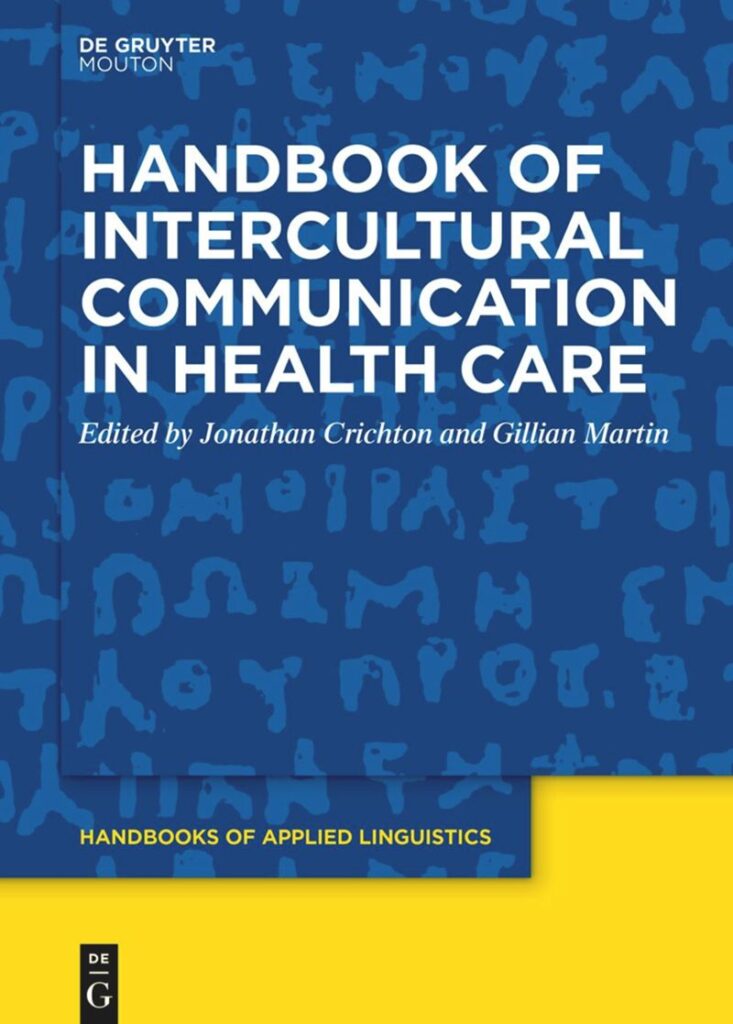
Readers who want to go deeper can look out for the Handbook of Intercultural Communication in Health Care. It is edited by Jonathan Crichton and Gillian Martin and published by De Gruyter Mouton. One bookseller lists the publication date as 19 October 2026.
The handbook brings together researchers and practitioners from many countries and health specialisms. It has five sections: expertise and accountability; trust, ethics and autonomy; access and equity; teams and collaboration; and education and training. Health professionals respond to each theme from the point of view of clinical practice. The editors say it is the first book to build a bridge between research and practice in this field.
The education and training section will be of particular interest to English for Healthcare specialists. Together, the Italian study and the new handbook show a field that is moving from describing problems towards practical solutions.

Back to Menu ↩ Good doctors do not simply tell patients what to do. They explain the options, listen to the patient’s values and concerns,


Back to Menu ↩ Metaphors can tell us a lot about how people think. A new study, published in Acta Psychologica, uses metaphors to explore

Back to Menu ↩ In many countries, a large part of the healthcare workforce has trained overseas. In the UK for example, international medical graduates