




The devolution of adult skills funding was meant to bring decision-making closer to communities and their needs. For ESOL provision, it is increasingly looking like a double-edged sword – and learners are caught in the middle.
The starkest illustration is Greater Lincolnshire. In February 2026, the Combined County Authority — led by Reform UK mayor Dame Andrea Jenkyns — voted to scrap funded ESOL provision from August 2027, redirecting the £1 million annual budget towards a general literacy programme. The decision was made despite nearly three-quarters of the 375 consultation respondents opposing it. ¹ Jenkyns justified the cut by arguing ESOL “doesn’t go to native Lincolnshire people”, a framing that drew immediate condemnation from the University and College Union, which called it “an attack on community cohesion.” ² Skills Minister Jacqui Smith described the decision as “bizarre”, vowing to explore how ESOL provision could be made “available everywhere” – while also acknowledging the government’s limited levers once funding is devolved. ³
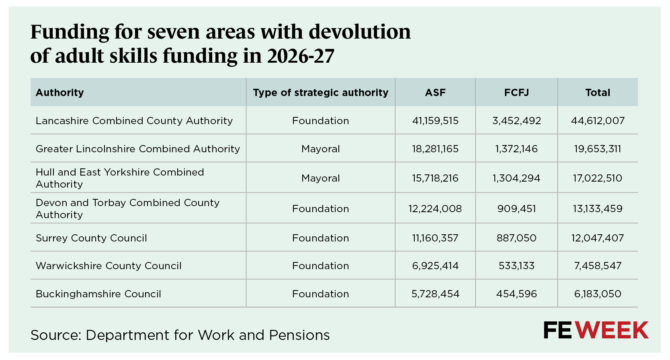
The Lincolnshire situation may not be an isolated case for long. In 2026-27, seven new strategic authorities will take control of their adult skills budgets for the first time, bringing the proportion of devolved adult skills funding to 77% of the approximate £1.4 billion national total. ⁴ Jenkyns herself called the decision “a really exciting moment” and claimed leaders from other areas had expressed interest in her approach — a prospect that will concern many in the sector. ¹˒³
The impact on learners is real and immediate. Resettlement ESOL programmes for Ukrainians, Hongkongers and other refugees — funded through MHCLG — ended in March 2026, creating a funding cliff-edge for some of the most vulnerable learners at precisely the moment when mainstream provision is becoming less certain. ⁵ Those seeking asylum, meanwhile, must still wait six months before becoming eligible for ASF-funded ESOL — a gap that no amount of devolution redesign has yet addressed. ⁵
The Bell Foundation has called for a national framework, co-developed with mayoral authorities, that sets out a clear vision and core principles for ESOL provision — ensuring that where funding sits should not determine whether learners get the support they need. ⁶ Without it, the risk is that ESOL becomes a postcode lottery, shaped more by local politics than by learners’ needs.
The Language of Change