



Knowledge Bank
Practising difficult conversations with an AI patient
Back to Menu ↩ Good doctors do not simply tell patients what to do. They explain the options, listen to the patient’s values and concerns,

Mention gamification in a staffroom and reactions tend to split along familiar lines: enthusiasts who have seen it transform a reluctant class, and sceptics who worry it is all points and no depth. The research of the past year or so suggests both camps have a point — but that when gamification is designed thoughtfully and tied to clear learning objectives, the evidence in its favour is compelling, and the case for applying it specifically to medical English is growing stronger.
A 2025 scoping review published in BMC Medical Education examined gamified applications across both language teaching and healthcare education. Studies found that incorporating gaming elements such as interactive board games and role-playing scenarios significantly increased student participation and knowledge retention, while gamification was shown to increase enjoyment, enhance student motivation, and improve participation while facilitating autonomous learning (Zolfaghari et al., 2025a).¹
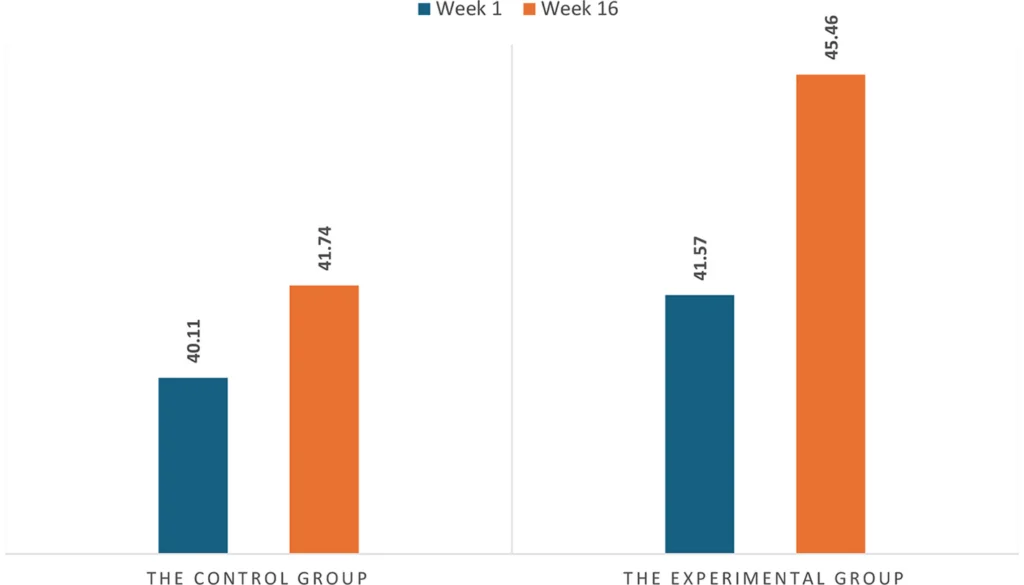
EAP and EFL literature has been adding weight to this picture. A 2025 quasi-experimental study published in Frontiers in Psychology, involving 220 first-year undergraduates studying English as a foreign language, found a significant increase in gamification’s benefits for EFL reading proficiency and language enjoyment – relevant to medical English programmes where extended reading of clinical texts is a core skill (Cheng, Lu, & Xiao, 2025).² A separate 2025 systematic review of gamified learning motivation across undergraduate EFL contexts identified positive effects on engagement and performance, but also sounded a note of caution: psychological challenges such as burnout and anxiety remain significant barriers, and research gaps persist regarding the long-term impact of gamified learning on EFL motivation (Lustyantie & Kasan, 2025).³
That anxiety dimension is particularly relevant to medical English contexts, where students often face the pressure of acquiring complex clinical content and expressing it in a non-native language in high-stakes conversations with patients. A 2025 mixed-methods study specifically examining gamification and EFL anxiety used the gamified platform ClassPoint with university students enrolled in an English for Information Professionals course. It found that quantitative data showed a statistically significant reduction in learners’ anxiety across all dimensions, including classroom environment anxiety, self-confidence anxiety, language skills anxiety, and academic achievement anxiety. At the same time, qualitative feedback revealed that anonymous participation and game-like features enhanced learners’ motivation, confidence, and enjoyment (Amnouychokanant, 2025).⁴
For medical English teachers working with students who freeze when asked to role-play a patient consultation in English, this could be an important finding.
Perhaps the most directly relevant recent work concerns gamification in ESP and healthcare training settings. A 2026 conference paper from the Future Technologies Conference investigated gamification specifically in ESP vocabulary learning at university level. It found that gamified elements during instruction positively impacted student motivation in ESP learning compared with traditional teaching methods, though with different learner types responding differently to gamified instruction (Grubješić, Ivanjko, & Juričić, 2026).⁵ The finding that learning style interacts with gamification effectiveness is a useful prompt for course designers: a one-size-fits-all approach may not serve the range of learners in a typical medical or nursing cohort.
Meanwhile, research from healthcare education settings – which medical English programmes can draw on – offers some strikingly direct evidence. A 2025 intervention study using Kahoot! with nursing students found that nursing students’ knowledge and satisfaction significantly increased after eight weeks of Kahoot! gamification, and that the level of interest and collaboration among students after gamification was significantly higher than baseline (Mohammadi, Aazami, & Azizifar, 2025).⁶ A 2025 quasi-experimental study of gamification in nursing anatomy and physiology, using Kahoot! quizzes and structured puzzle activities, reported improvements in both class engagement and knowledge-based critical thinking (Alshammari et al., 2025).⁷
The research points to a practical toolkit that maps well onto medical English contexts. For vocabulary, platforms like Kahoot! and Quizlet allow teachers to build quiz sets around clinical terminology, drug names, or anatomical language – with leaderboards providing competitive momentum without threatening anonymity. For reading, timed comprehension challenges can replicate the game mechanics that research associates with improved proficiency. For speaking, scenario-based roleplay with scoring rubrics – awarding points for appropriate register, empathy markers, or accurate symptom description – applies gamification logic to communicative competence.
The broader message from EAP and ESP research is that the most effective gamified approaches are those where gamified elements correspond to learning goals, with a spectrum of game mechanics that can accommodate different learners’ preferences and provide continuous feedback to enhance efficacy (Shanlax, 2025).⁸
For heads of department evaluating their digital strategy, and for course designers wondering whether gamification is a gimmick or a genuine pedagogical tool, the answer from the evidence appears to be that it depends on the design. Done well – with clear alignment to outcomes, sensitivity to learner anxiety, and variety in the mechanics used – gamification has a legitimate and growing evidence base in those contexts that matter to medical English education.
Back to Menu ↩ Good doctors do not simply tell patients what to do. They explain the options, listen to the patient’s values and concerns,

Back to Menu ↩ Metaphors can tell us a lot about how people think. A new study, published in Acta Psychologica, uses metaphors to explore

Back to Menu ↩ In many countries, a large part of the healthcare workforce has trained overseas. In the UK for example, international medical graduates