



The annual NATECLA conference is the highlight of the annual professional development calendar for many in the ESOL sector and this year’s event showed why.
SLC’s Chris Moore attended throughout, presenting on the second day on Cultural Awareness in the ESOL classroom along with his TERM colleague and co-founder, Stephanie Lam.
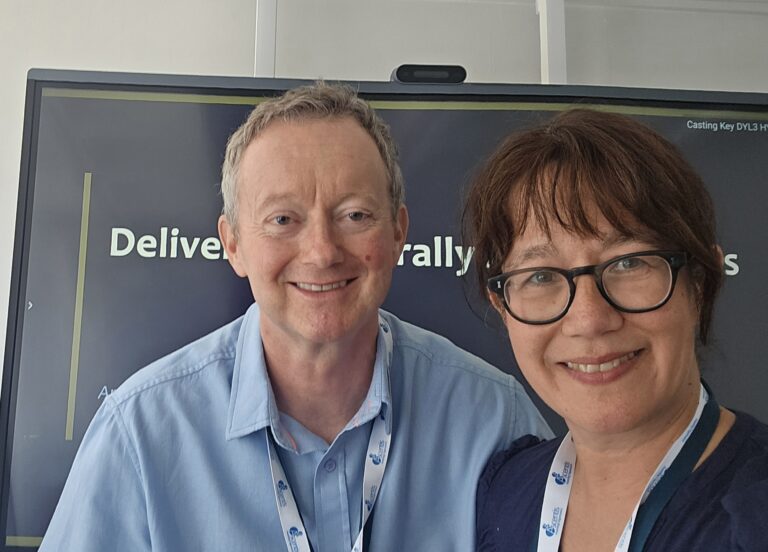
Here, he shares some of the insights gained at the conference.
It was almost impossible to choose which of the sessions to go to, as there were so many running alongside each other. Ultimately though, I focused on the ones closest to what we do at SLC, i.e. vocational ESOL courses, especially those focused on adopting innovative approaches, as well as sessions on ESOL policy and practical teaching. I still spend a few hours a week at the coalface and am always fascinated by how others approach the alchemy of turning words and ideas into learning.
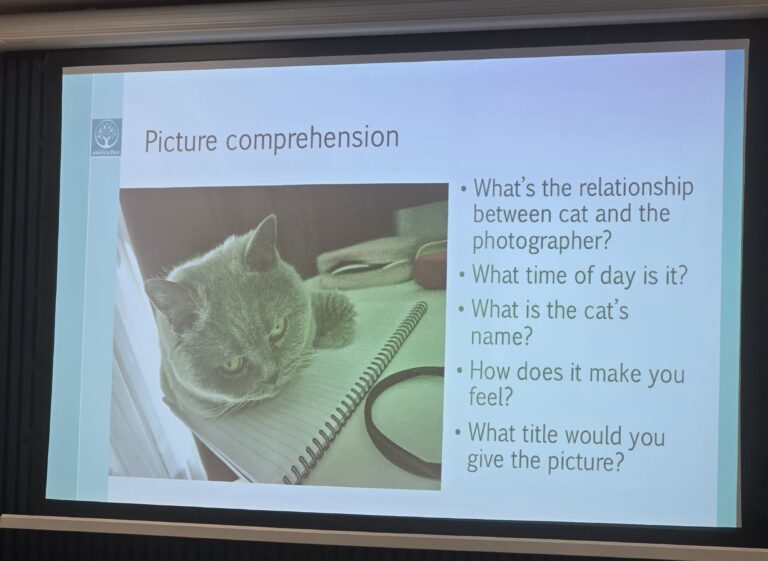
Two sessions on blending vocational ESOL into college courses stuck out for me – one from Matthew Lunt and Michelle Villar at City of Liverpool College and the other from Laura Wiggin at Hopwood Hall College. Designing courses that prepare students to communicate and thrive at work is what we do at SLC, so loved seeing the work students were doing from learning the language of plastering and motor vehicle maintenance to designing and pitching sustainable products. We’re delighted to highlight both projects in July’s ESOL: The Language of Change newsletter.
Philida Schellekens and Helen Guezelekuecuek’s breakdown of recent ESOL data was fascinating. So interesting to see the numbers attending non-regulated tailored learning almost match those attending regulated courses at college. And another reminder of how many refugees – over 50% – have degrees from their home countries, yet most are in pre-entry to Entry Level 3 ESOL courses, with a significant drop off at higher levels. If only more resource were available to supercharge refugee language education and unlock the vast amounts of unused experience, knowledge and skills across the country. We have highlighted this issue in a recent article, drawing on the information presented.
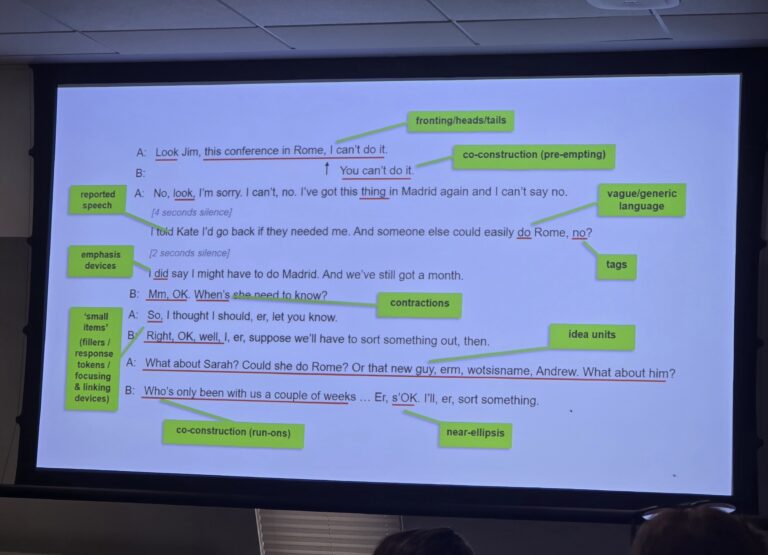
For a self-confessed language nerd, Jon Hird’s plenary on spoken grammar was great to see. Clearly spoken language follows its own patterns and rhythms, breaking all the ‘rules’ we so assiduously teach students studying for exams. Jon’s analysis of how he analyses a set of typical utterances, looking at ‘idea chunks’, sentence fragments, false starts, repair and reformulation was particularly revealing – see the image and prepare to be enlightened.
The opening plenary on the lived experience of Axel, Aster and Akram Elsir, three refugee learners and their inspiring journeys into education, work and community leadership illustrate the power that language education has to transform lives – a brilliant argument for the ESOL sector and what it does.
It was also a delight to jointly present a session on delivering culturally aware lessons to ESOL learners. Understanding and working effectively with culturally very diverse groups can be challenging but incredibly rewarding. A huge thank you to those who contributed so much of their own teaching experience during the session.
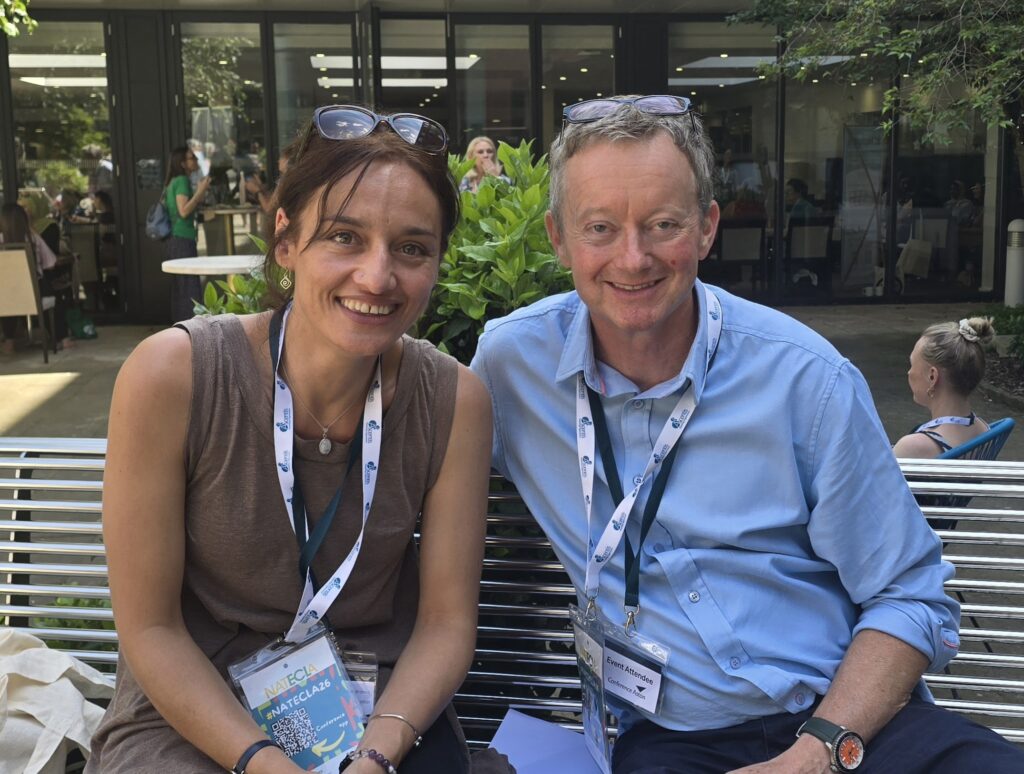
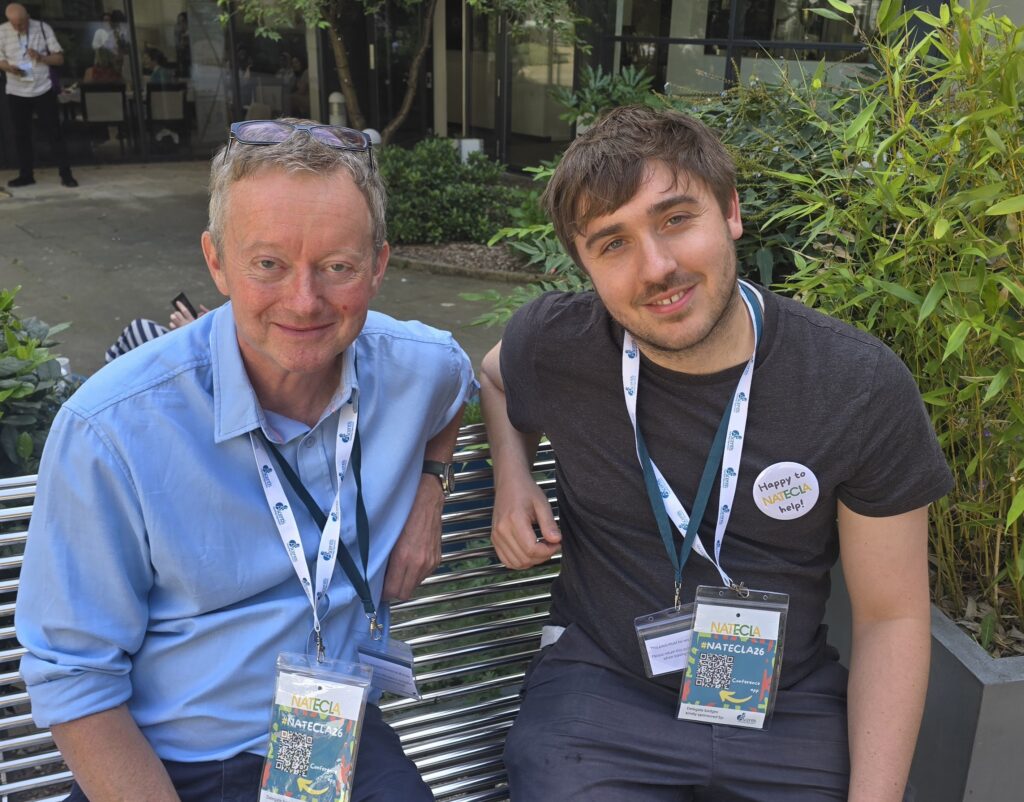
Finally, it was a privilege to catch up with old friends and colleagues over the two days, make new connections, share ideas and chatting with fellow ESOL enthusiasts over coffee and food. A huge thank you to the NATECLA team for putting on such a well-organised conference. Looking forward to the next one!
The Language of Change