


In this article, Laura Wiggin, Curriculum Manager for ESOL, Skills and Community Interpreting at Hopwood Hall College, shares how the Sustainable ESOL Enterprise Day (SEED) has evolved into an annual curriculum project that combines sustainability, enterprise, employability and language learning.
The Sustainable ESOL Enterprise Day (SEED) has become one of the highlights of our curriculum. What began as a simple enterprise activity has evolved into an annual project that brings together language learning, sustainability, employability and digital skills through relevant, learner-led themes. Every year, learners work collaboratively to research, create and present products or campaigns that respond to real-world issues, developing confidence and communication skills along the way.
Every ESOL Study Programme class, from Pre-Entry to Level 1, takes part in the project during their employability and digital skills lessons over seven weeks. Teachers are given the annual theme together with a suggested direction, but the success of the project relies on allowing learners to shape the final outcome.
The project begins with the introduction of the theme and key vocabulary. Learners then work in groups to explore ideas, negotiate possible products or campaigns and decide how they want to respond. Through careful facilitation, questioning and encouragement, learners quickly move beyond the teacher’s initial suggestions. Some groups develop marketing campaigns, others create branding, logos and slogans, while others focus on designing products or awareness campaigns.
Once a direction has been agreed, learners divide responsibilities and plan the resources they need. Wherever possible, materials are recycled, borrowed from other departments or sourced at very little cost, ensuring that sustainability is embedded throughout the project rather than simply becoming the topic being discussed.
The atmosphere during the project is very different from a traditional classroom. Learners are moving around, discussing ideas, solving problems and making decisions together. Posters designed during digital skills lessons begin appearing around the department, building anticipation for the final event.
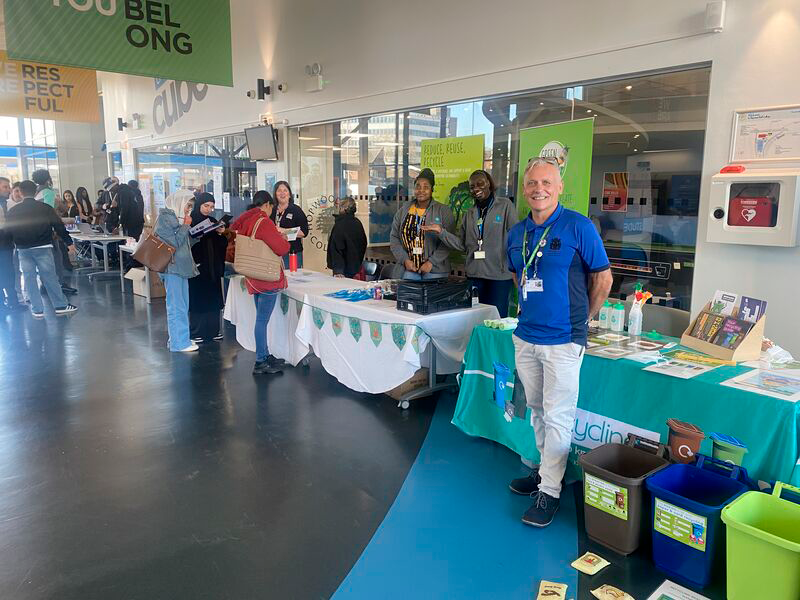
The SEED Fair provides learners with an authentic audience. Lower-level learners sell products from stalls, having practised customer interactions through role play. Higher-level learners present research, explain their concepts and answer questions from visitors. Expectations differ according to language level, but every learner develops communication, teamwork and employability skills through meaningful participation.
The annual theme is always chosen because it reflects issues that are relevant to learners’ lives while creating opportunities for purposeful language learning.
The first sustainability-focused project responded to the cost-of-living crisis at a time when several learners were living in temporary hotel accommodation. Working alongside the Catering department, learners developed affordable food products, including Nim Nam Noodles – dehydrated vegetables, spices and noodles that could be prepared using only a kettle – together with cookie dough in a bottle. QR codes linked customers to recipes and ingredient lists, introducing learners to digital marketing while reducing printed materials.
As the cost-of-living crisis continued, the focus shifted towards upcycling. Learners created low-cost gifts using recycled materials, including papier-mâché pen pots, cardboard photo frames and handmade packaging.
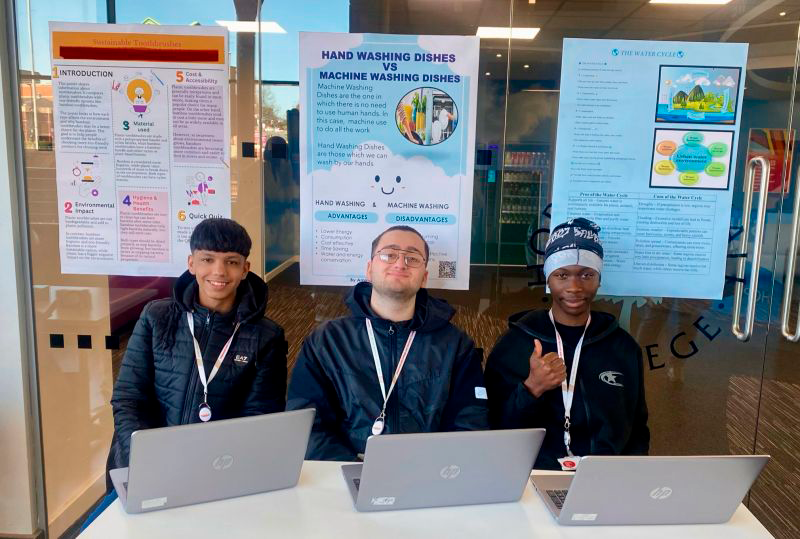
The following year explored sustainable personal hygiene. Pre-Entry and Entry 1 learners created scented soap bars and soap sponges before costing, packaging and selling them during Green Week. Alongside this, Level 1 learners researched topics such as sustainable period products, water conservation and bamboo toothbrushes, producing presentations, posters and interactive quizzes to share their findings with visitors.
Our most recent theme, from Seed to Plate, focused on sustainable food production. Learners grew herbs and vegetables while developing the language of planting, growing and harvesting. They monitored plant growth using simple spreadsheets, compared supermarket prices with the cost of growing food themselves and created recipes using the produce they had grown. The excitement when the first seedlings appeared demonstrated just how motivating practical, hands-on learning can be.
SEED has changed significantly over the past five years. Originally, it was a straightforward enterprise competition where learners received a £10 investment and the winning team generated the greatest profit.
Although this developed teamwork and entrepreneurial thinking, it also encouraged unnecessary purchasing and, in some cases, waste. As our understanding of Education for Sustainable Development developed, it became clear that the project itself needed to model the values we were encouraging learners to adopt.
Rather than removing the enterprise element, we reimagined it. Sustainability became the starting point for every project, with learners encouraged to consider environmental, social and economic issues alongside profitability. Success was no longer measured solely by the money raised but by the quality of ideas, collaboration, creativity and the positive impact of the products or campaigns they created.
The project also became much more closely embedded within the ESOL curriculum. Topic-based learning provides learners with meaningful contexts in which to develop language (Ellis, 2003; Willis & Willis, 2007). SEED extends this further by giving learners authentic reasons to communicate, negotiate, solve problems and present ideas to real audiences.
Today, SEED forms part of our annual curriculum planning and contributes to learners’ employability, digital and personal development alongside their English language learning. It provides authentic opportunities to develop teamwork, planning, budgeting, customer service, presentation and digital communication skills while naturally embedding English, maths and sustainability throughout the curriculum.
Perhaps most importantly, the project belongs to the learners. Every class produces something different because learners make the decisions, solve the problems and shape the final outcome. This sense of ownership creates exceptionally high levels of engagement, confidence and pride.
The project now aligns with the college’s annual Green Week, allowing learners to showcase their work to the wider college community while strengthening links with our sustainability strategy and external partners. What started as a simple enterprise competition has evolved into an annual celebration of language learning with purpose, demonstrating how ESOL can successfully combine sustainability, enterprise and employability to create learning experiences that extend far beyond the classroom.
The Language of Change
15% on all 1-month and 3-month subscription courses this Halloween!