


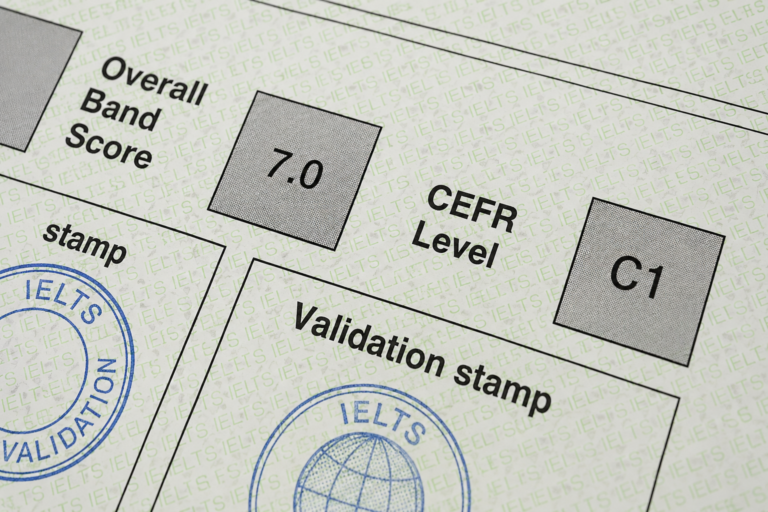

For many ESOL learners in English FE colleges, there is a structural disconnect at the heart of their educational journey: the qualifications they work towards in class are not the same as those they need for immigration purposes. As English language requirements for visas and settlement rise, this mismatch is becoming harder to ignore.
Most ESOL provision in publicly funded FE colleges leads to ESOL Skills for Life qualifications, an Ofqual-regulated suite running from Entry Level 1 (A1) to Level 2 (C1 on the CEFR). These qualifications were designed to support integration, education and employment progression and are taken as standalone qualifications. At the higher levels, a learner can focus entirely on the ESOL strand without any requirement to also take Functional Skills Maths or Literacy. Within the ESOL strand itself, speaking and listening, reading, and writing are assessed separately and can each be taken as standalone Awards, offering further flexibility for learners with specific needs.
However, as Ofqual made explicit in its own 2022 research report, ESOL Skills for Life qualifications are not designed for or used as evidence for visa, residency or citizenship requirements. They serve a different purpose entirely.
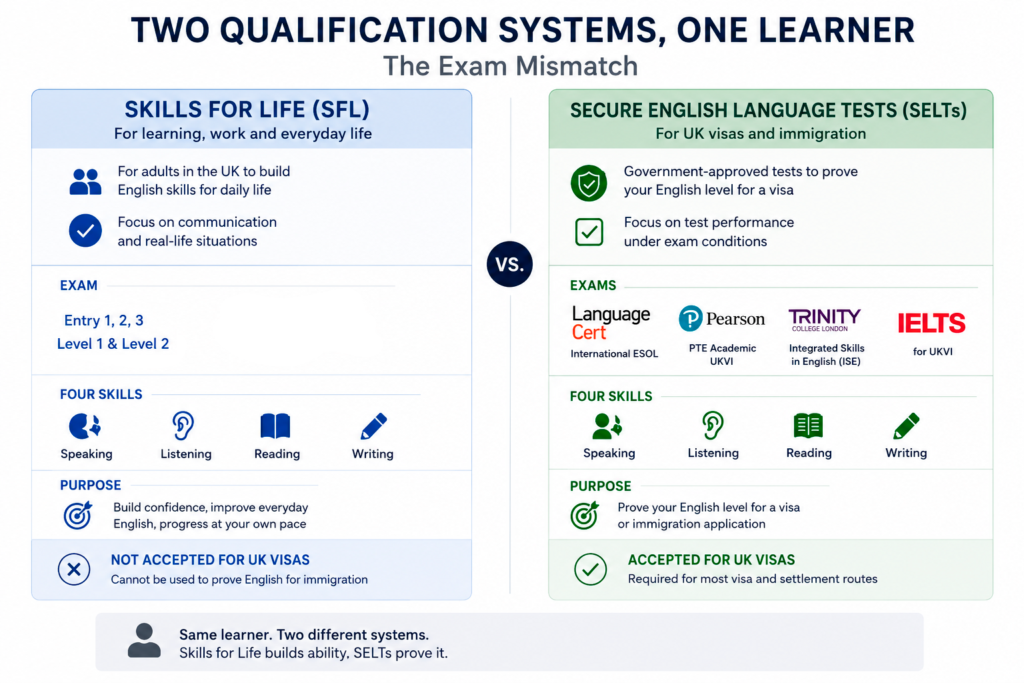
The qualifications that are accepted for immigration purposes are Secure English Language Tests (SELTs) – commercial tests from a restricted Home Office-approved list, including IELTS for UKVI, PTE Academic UKVI, LanguageCert International ESOL SELT and Trinity College London SELT. These must be taken at approved test centres and typically cost between £150 and £250, a significant additional expense for learners who may have already invested years in publicly-funded ESOL study.
The mismatch is further heightened by the new B2 level requirements for Skilled Worker entry and, from March 2027, for ILR. The Association of Colleges has reported that 85% of learners leave ESOL provision with Entry Level 1–3 qualifications, equivalent to A1 to B1, and well below B2. The Skills for Life system is not currently producing outcomes at the level the immigration framework now demands.
The result is a dual burden on learners. Years of publicly funded ESOL study may bring genuine language development, but still leave them needing to sit – and pay for – a separate commercial test to satisfy immigration requirements. As the B2 bar extends further across visa and settlement routes, more people will find themselves in this position: qualified in one system, unrecognised in another.
The DfE’s current ESOL qualifications review, which invited employer input earlier this year, is an opportunity to address some of this misalignment. Whether it will do so, and whether any reformed qualifications might gain recognition for immigration purposes, remains to be seen.
The Language of Change