

SIFE: Is Signing Off Without a Language Test Really Working for NHS Nurses?
Back to Menu ↩ When the NMC introduced the SIFE pathway in 2023, it was intended to solve a real and pressing problem: internationally educated
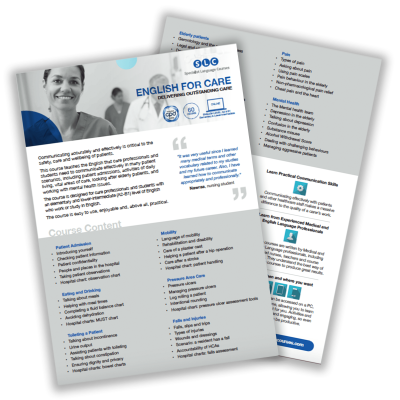
This English for Care course gives students a strong foundation in the language of care and nursing.
SLC’s English for Care course covers a wide range of language across many essential areas of care. Inputs and tasks focus on interactions with patients and nurses, building communication skills, vocabulary development including essential medical and everyday terminology, grammar and pronunciation.
Topics include managing pain, pressure area care, dealing with falls, mental health issues, infection control, dealing with elderly patients, taking observations, and managing daily activities, such as toileting, food, drink and mobility.
The course provides an excellent foundation in care-specific language and is particularly suitable for first year undergraduates in nursing degrees. Many universities and nursing colleges now use English for Care in Year 1 and English for Nurses in Year 2.

Back to Menu ↩ When the NMC introduced the SIFE pathway in 2023, it was intended to solve a real and pressing problem: internationally educated

If you’re at all interested in how language works in healthcare, you’d be nuts to miss the upcoming webinar from SLC and EALTHY.

Back to Menu ↩ Vocational ESOL focuses on the language that migrants and refugees need when working in the UK. Different sectors require different language
Subscribe to the newsletter to keep up to date with all our new resources.