

Ten years of Germany’s Integration Act: what the evidence says about language and integration
Contact us Back to Menu ↩ August marked ten years since Germany’s Integration Act came into force – legislation that tied recognised refugees’ access to
A new qualitative study published in JMIR Medical Education in February 2026 offers a timely glimpse into the future of clinical communication skills training — and raises some fascinating questions for those of us teaching English for Healthcare.
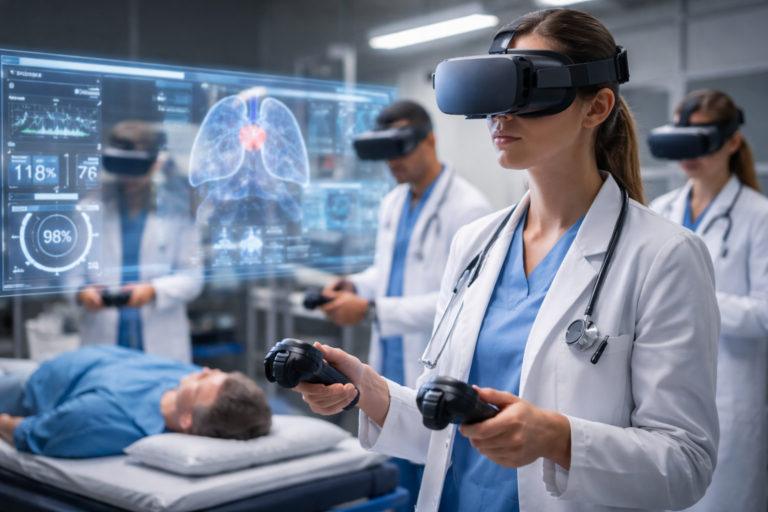
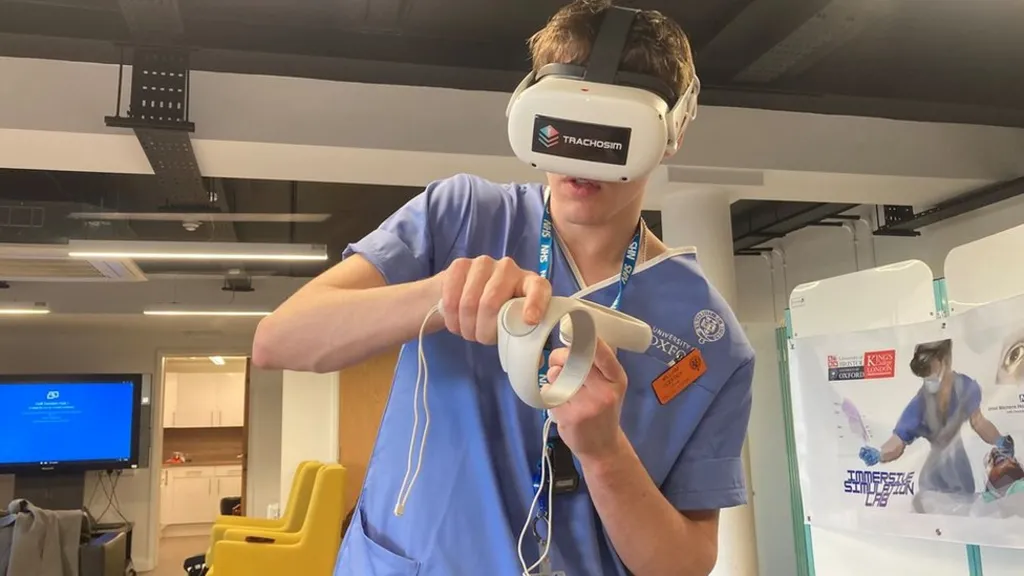
The study, conducted at Great Western Hospital in Swindon, UK, explored medical students’ experiences of VR simulation training in which participants undertook a medical consultation with a virtual patient using verbal prompts to manage a randomly assigned clinical scenario. Crucially, students were not told the diagnosis in advance — they had to assess the virtual patient and determine it themselves, as if it were a real case. Analysis of the VR training was structured around the 5 domains of the ITEM framework: immersion, motivation, cognitive load, system usability, and debriefing.
The findings were largely positive. Students valued VR training for its ability to foster self-directed and active learning, describing it as a more engaging alternative to traditional text-based education — one that required independent decision-making and systematic thinking. The immersive environment was found to boost both motivation and confidence.
However, the study also identified significant limitations that will resonate strongly with healthcare English teachers. Participants noted limited scenario variability and a lack of meaningful patient interaction, including limited verbal exchanges and opportunities for history-taking — skills that are critical to effective healthcare delivery. The researchers recommended that future VR tools incorporate more interactive features, particularly around spoken communication with virtual patients.
This is precisely where English for Healthcare teaching becomes indispensable. VR can simulate a ward environment, but it cannot yet replicate the full complexity of a real clinical conversation —the active listening, carefully eliciting symptoms, reassuring an anxious patient, or negotiating a treatment plan. These are the communication skills that healthcare English teachers develop every day in the classroom, and which assessments like OET are specifically designed to measure.
The researchers concluded that future integration of VR should prioritise design variability and structured debriefing to better optimise learning outcomes. This suggests that language-focused debriefing sessions, led by trained teachers, could be a natural and valuable complement to immersive VR training. As simulation technology becomes more embedded in medical and nursing education, the opportunity for healthcare English teachers to collaborate with clinical educators has never been greater.

Contact us Back to Menu ↩ August marked ten years since Germany’s Integration Act came into force – legislation that tied recognised refugees’ access to

Contact us Back to Menu ↩ Background In August, Greater Lincolnshire Combined County Authority voted to strip all funding from its ESOL provision from 2027,

Back to Menu ↩ Many of in the language teaching profession have used this claim at some point: learning a language is good for your brain. It