

Specialist Language Courses

AI vs. human interpreters: what surgical patients actually prefer

Telemedicine vs in-person consultation

Most discussions about AI in healthcare interpretation focus on whether the technology is accurate enough to use. A study from Mass General Brigham, published in NEJM Catalyst, asks a different question: when patients are given a genuine choice between an AI interpreter and a human one, which do they actually prefer, and why?

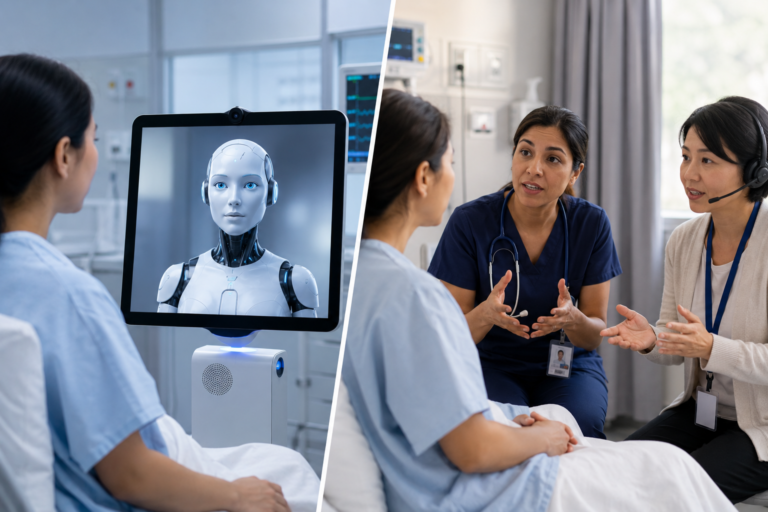
Researchers worked with 23 Spanish-speaking surgical patients at Brigham and Women’s Hospital, having each of them experience both a remote video human interpreter and a real-time AI interpretation platform during simulated postoperative consultations. Using a modified technology acceptance model, the team asked patients to reflect not just on whether they understood the information, but on how each option made them feel, in terms of trust, emotional connection, and cultural understanding.

The headline finding is that there was no clear winner. Patients did not gravitate toward one modality across the board; instead, their preference shifted depending on the situation. AI interpretation was valued for being fast, private, and literal, useful for routine, lower-stakes exchanges where patients wanted quick, unembellished information without involving a third person in the conversation. Human interpreters, by contrast, were strongly preferred for emotionally difficult conversations, where patients wanted to feel genuinely understood rather than simply translated, and where cultural nuance mattered to how information landed.

A theme running through the patient interviews was a desire for agency: patients wanted the ability to choose which mode of communication suited a given conversation, rather than having a single solution imposed on them by the hospital. Based on these findings, the researchers argue that AI should not be framed as a replacement for human interpreters, but as a complementary option within a broader language-access system, deployed strategically according to clinical sensitivity, urgency and patient preference.

For healthcare organisations weighing whether to invest in AI interpretation, video interpreting services, or both, the implication is that the real question is not which technology wins, but how to build a flexible system that lets patients pick the right tool for the moment.

Did you find this content valuable?

Subscribe to the Medical English Newsletter to receive monthly updates, insights, and resources on Medical English.

More To Explore