

Does learning languages really prevent dementia?
Back to Menu ↩ Many of in the language teaching profession have used this claim at some point: learning a language is good for your brain. It
Many of us use clips from medical dramas in class. Perhaps we are not always sure we should. The situations are invented, and the pacing is not realistic. A new open-access study in English for Specific Purposes argues that the practice is sound — as long as we know what to look for.
Julia Valeiras-Jurado and Edgar Bernad-Mechó begin with a problem every teacher knows. Real doctor–patient conversations are almost impossible to record, because of patient confidentiality. Television drama is the next best thing. But the authors ask us to keep two ideas apart. Verisimilitude means a story feels believable within its own world. Truthfulness means it is faithful to how professionals actually work. Drama needs the first to entertain us. Teaching needs the second. The two are easy to confuse, so we should choose clips carefully.
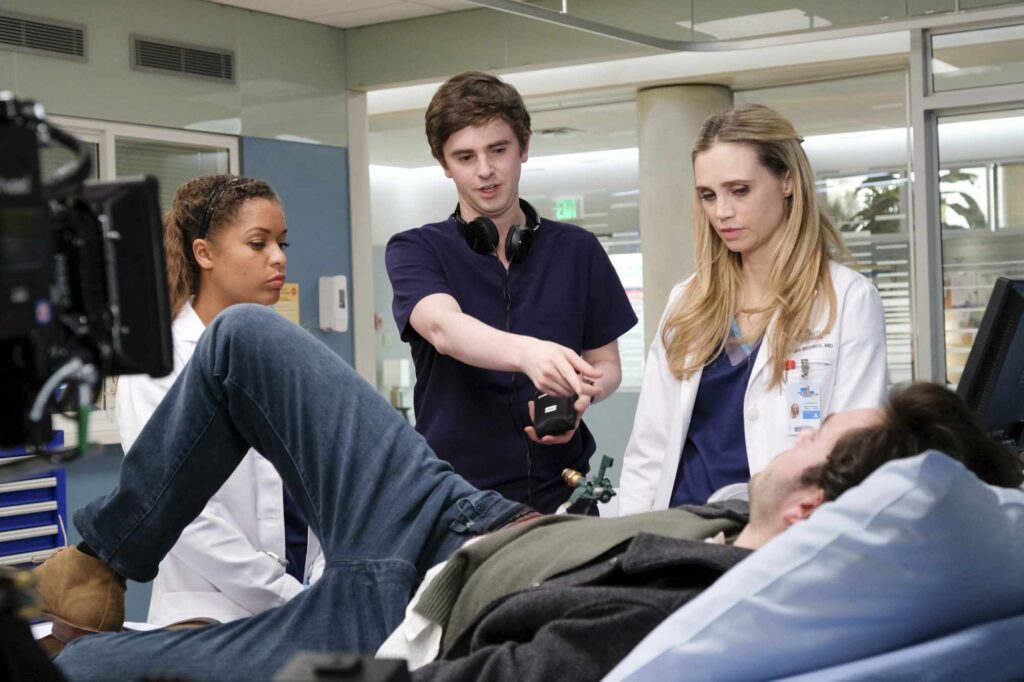
The study looks at recontextualization: the ways a specialist adapts complex information so that a non-specialist can understand it. The authors examined six short scenes from season one of The Good Doctor. They used their own annotation software, GRAPE-MARS, and a method called Multimodal Interaction Analysis, which tracks not just words but everything else that carries meaning — gesture, gaze, tone, objects, camera work.
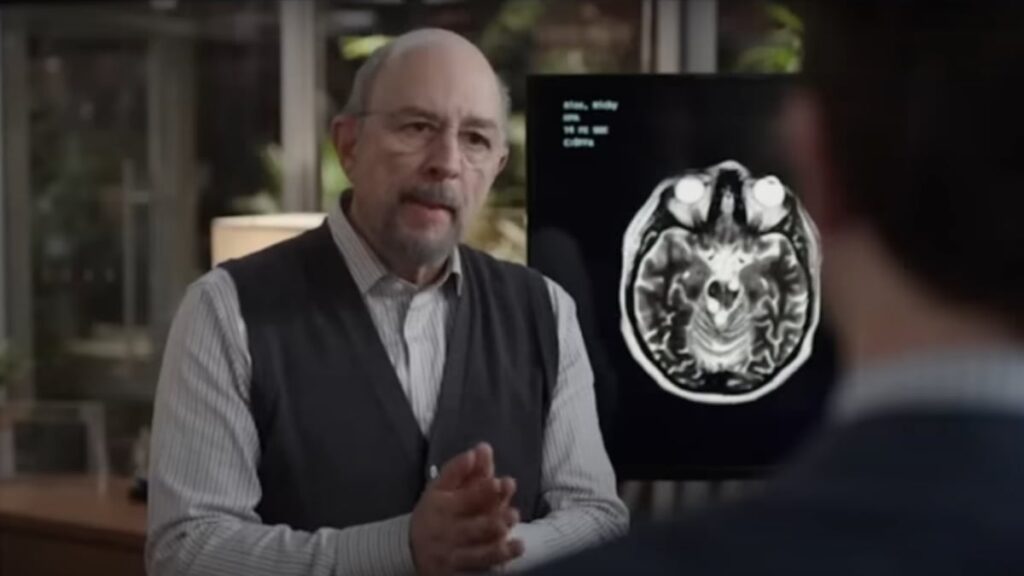
The first group of scenes shows doctors talking to other doctors. Perhaps surprisingly, the language stays technical and is not simplified at all. So who or what helps the viewer? The producers do. Medical images and on-screen text appear during the conversation. This visual support fills 61% of the clip time, with sound and visual effects, and is carefully composed on screen. Nothing else is used: no simpler wording, no gesture, no meaningful eye contact. The explaining is done by the camera and the editing, not by the characters.
The second group shows doctors talking to patients and family members. Here the picture changes completely. The doctors use a wide range of strategies: definitions and explanations (22.4% of the time), visual support such as a tablet or diagram (16.8%), imagined situations that ask the patient to picture an outcome, careful choices about what to say and in what order, and rephrasing in simpler words. Interestingly, comparisons and analogies appear only once (1.1%), and everyday examples not at all – surprising as many teaching materials treat analogy as an important tool.
The findings about non-verbal behaviour are useful. Speech took up 49.5% of the time and pauses 19%. Stress and emphasis in the voice accounted for 13%. But eye contact with the listener was present 73.9% of the time, while gestures appeared for less than 2%. Looking at the patient matters far more than moving the hands.
The authors analyse a 104-second scene in which three surgeons explain a brain operation. The first doctor explains. The patient only partly understands, so the doctor continues, using a tablet to show where the surgery will happen. A second doctor lists the possible effects. The patient agrees to the operation. A third doctor then goes further, selecting the most serious risks, and finally rephrasing everything in terms that matter to this particular patient: he is a professional gamer, and his career will end.
The voice changes across the scene. In the first explanation, pauses fill 10% of the time and emphasis 6%. In the final one, pauses reach 22% and emphasis 31%. The doctor sounds much firmer. Recontextualization is not one fixed technique. It adjusts as the speaker judges how much the listener has understood.
The researchers then analyse this scene in cultural terms. The repeated warnings have two purposes: firstly, making sure the patient truly consents, and secondly, protecting the medical team from later legal claims. They link this to the high cost of malpractice cases in the United States. Medical dramas, they suggest, may pass on the legal and professional culture of one country along with the medicine. For anyone preparing students to work in a different health system, this is important to note.
The authors suggest analysing clips together with students, then using role play. These scenarios must be multimodal, so combine all the different ways of conveying meaning, including the use of gaze and paralinguistic features like pauses and prominence. In lessons, learners give a short explanation to a patient. They must define technical terms, use imagined situations to answer likely worries, and combine speech, eye contact and visual aids so that everything works together. When these elements do not match, the message becomes less convincing.
The authors are open about the limits of the study: six scenes, one series, one culture. They therefore call for comparison with dramas from other countries and, ideally, with real hospital conversations.
What do you think? Read the article and let us know!

Back to Menu ↩ Many of in the language teaching profession have used this claim at some point: learning a language is good for your brain. It

Back to Menu ↩ Support for internationally recruited nurses usually stops early. There is a registration process, a language test, an induction programme, and then an

Back to Menu ↩ In medical English classes, we often discuss language barriers in one direction. Whether it be moving overseas for work, attending conferences,